Courses Overview and Trainers
Course Description
Provides a comprehensive introduction to artificial intelligence (AI) and its transformative role in journalism and media. You will explore core AI concepts through real-world examples drawn from news production environments, examining how AI tools enhance workflows, from data-driven storytelling to audience engagement. In parallel, the course critically examines ethical challenges such as bias, misinformation, privacy, transparency, and accountability in AI-powered media practices.
Through case studies, interactive discussions, and practical exercises, you will gain the foundational knowledge needed to responsibly evaluate and integrate AI solutions in modern newsrooms.
Learning Outcomes
- Describe fundamental AI principles and their relevance to media and journalism.
- Evaluate how AI tools improve newsroom workflows and audience engagement.
- Analyze common misconceptions about AI’s capabilities, clarifying real-world limitations and opportunities.
- Examine ethical issues such as bias, misinformation, privacy, and transparency in AI use within media.
- Establish criteria for choosing AI solutions that align with specific newsroom objectives, such as content curation and fact-checking.
- Formulate guidelines for integrating AI in media practices, emphasizing transparency and accountability.
- Design AI strategies that harmonize technological innovation with organizational values to build trust in media practices.
Course Trainer
 |
Ahmed El Gody is an academic serving as an Associate Professor in Media and Communication Studies at Örebro University, Sweden, and an Associate Professor in Media and Creative Industries at United Arab Emirates University. His scholarly expertise is deeply rooted in media studies, with a particular focus on newsroom operations, the integration of Artificial Intelligence in journalism, and the processes of media liberation and democratization in the Middle East. Dr. El Gody is the author of seminal works including African Media and ICTs (2008), published by the United Nations Economic Commission for Africa, Journalism in a Network (2012) by Örebro University Press, News in Times of Fake News (2022) by Örebro University Press, and Using Artificial Intelligence in the Al Jazeera Newsroom (2022) by the Al Jazeera Institute. These works examine critical intersections between technology, media systems, and societal change, with a particular emphasis on the role of ICTs and AI in reshaping global and regional media landscapes.
As the managing editor of Arab Media & Society, Dr. El Gody contributes significantly to the development and dissemination of research on Arab media, and he serves on the editorial boards of several prominent academic journals. His research outputs, which include numerous peer-reviewed articles and book chapters, span a wide array of topics, including the role of media in the Arab Spring, the impact of social media on political empowerment, and the ongoing evolution of media systems in the Arab world. His work is not only a valuable contribution to media and communication studies but also offers a nuanced understanding of the interplay between technology, journalism, and societal transformation in the context of the Middle East and North Africa (MENA) region. Dr. El Gody's scholarly work aim to illuminate the complex dynamics of media systems and their critical role in shaping the political, cultural, and social development of societies.
Course Description
This course immerses you in the practical applications of AI within digital journalism. Designed to build proficiency in using AI tools, the course combines hands-on labs, interactive demonstrations, and collaborative exercises to explore a broad range of technologies ranging from content creation and news automation to audience personalization. Alongside developing technical skills, you will engage in reflective discussions and scenario analyses to address ethical considerations and establish responsible guidelines. Ultimately, the course equips you to drive AI‑powered digital transformation within diverse newsroom settings.
Learning Outcomes
- Explain key AI tools, underlying technologies, and their applications in digital journalism.
- Demonstrate practical competence in using AI applications for content creation, news automation, and personalization through hands-on exercises.
- Develop AI-driven strategies that integrate seamlessly into newsroom operations, selecting the appropriate tools for specific workflows.
- Create ethical guidelines that address issues such as bias, transparency, and accountability in the deployment of AI in journalism.
- Evaluate the effectiveness of AI implementations by establishing and applying key performance indicators (KPIs) and return-on-investment (ROI) metrics.
- Demonstrate a proactive, continuous learning mindset and innovative leadership to champion digital transformation in media organizations.
Course Trainer
 |
Omar Mostafa is a digital media expert, media trainer, and digital content strategist with over 20 years of experience in journalism, communications, and AI-driven newsroom transformation. Holding an MBA in Media Management, he combines technical and business expertise to drive innovation in digital journalism and content strategy. Throughout his career, Omar has worked as a journalist, trainer, coach, content manager, and project manager, specializing in AI integration, newsroom automation, and data-driven storytelling. He has successfully trained media professionals, implemented effective content strategies, and managed digital projects that enhance engagement and efficiency. Passionate about the evolving media landscape, Omar seeks opportunities to apply his expertise in digital journalism and AI-powered media solutions, helping organizations navigate the future of news and communications.
Course Description
This course highlights the pivotal role of data in driving AI applications within media and journalism. You will explore how data quality, structure, and preparation directly influence the performance of AI-driven tools in storytelling, fact-checking, and media analytics. Through an examination of the entire data pipeline, from collection and structuring to annotation and validation, you will gain a comprehensive understanding of data management. The course also addresses how to identify and mitigate biases in datasets and examines the ethical considerations related to data privacy, transparency, and accountability in automated journalism.
Learning Outcomes
- Examine how data quality, structure, and management impact AI applications in journalism, including automated content generation, fact-checking, and media analytics.
- Describe the full data lifecycle and its influence on AI model performance.
- Distinguish between different data types
- Assess different data types and their suitability for various AI applications in media.
- Evaluate how data preprocessing techniques affect the reliability and accuracy of AI models.
- Develop strategies to minimize the impact of common biases in datasets on AI outputs.
- Examine ethical issues related to data privacy, transparency, and accountability in the context of AI-driven journalism.
Course Trainer
 |
Hager Hesham Mustafa is an award-winning data-driven journalist, trainer, and founder of Anmat, an initiative that connects journalism, data science, and social research to rethink how the Global South is represented in the media. She has produced and contributed to investigative and multimedia projects with BBC, Al-Araby TV, and ARIJ, and has trained tens of journalists with organizations like the Egyptian Journalists’ Syndicate, MiCT, and Birzeit University. Hager’s training focuses on data storytelling, Python for journalists, and advanced data analysis. Her work combines journalistic investigation with analytical depth, helping journalists transform complex data into accessible, evidence-based narratives.
Course Description
This course empowers media organizations’ social media teams, content creators, influencers, and digital media enthusiasts to effectively integrate AI into their workflows, focusing primarily on social media strategy, content creation, community management, and paid media. You will gain practical knowledge using diverse AI tools to streamline your tasks, improve content quality, engage audiences effectively, and enhance overall platform performance. The course emphasizes hands-on experience, strategic understanding, and clear practical applications tailored specifically for digital media environments.
Learning Outcomes
- Explain how AI technologies optimize social media content, engagement, and overall platform performance.
- Evaluate AI-generated data to assess trends, engagement patterns, and audience behavior on digital platforms.
- Demonstrate the use of AI-powered tools for automating content creation, scheduling, and publishing processes.
- Explain how AI chatbots work and how AI enhances audience communication and engagement.
- Assess the effectiveness of AI-driven sentiment analysis and community moderation in improving content performance.
- Apply AI-based ad targeting and automation strategies to boost the performance of paid media initiatives.
- Create an integrated, data-driven social media strategy tailored to the specific needs of media organizations and content creators.
Course Trainer
 |
Emad Adham's journey into digital marketing began unexpectedly in 2004 when he was appointed as the digital lead for a major global brand at a multinational advertising agency. What started as an unplanned role quickly became a turning point in his career. Weekly client-led training sessions opened his eyes to the vast potential of digital marketing, revealing its dynamic ability to connect brands with audiences in innovative ways. Two years ago, Emad demonstrated his commitment to innovation by investing in AI-driven solutions designed to elevate marketing services for his clients. By integrating advanced AI technologies, he aims to optimize strategies, enhance productivity, and unlock new efficiencies.
Course Description
This course equips you with a practical framework for designing and implementing AI-driven strategies that scale and modernize digital newsrooms. Moving beyond the basics of what AI is, this course dives into the “how” and “why” of integrating AI into newsroom operations. You will assess the core needs of modern newsrooms, develop AI-enhanced workflows, and foster a culture of innovation and experimentation. The course also addresses common organizational challenges, such as internal resistance, and promotes collaborative techniques by examining international best practices and real-world use cases.
Learning Outcomes
- Analyze operational requirements to identify opportunities for AI integration.
- Suggest appropriate AI-driven strategies/frameworks that seamlessly integrate into newsroom processes.
- Examine internal resistance to AI adoption while promoting a culture of experimentation.
- Develop collaborative techniques for implementing AI solutions.
- Utilize AI tools and frameworks to build effective, data-driven strategies.
- Analyze case studies from media organizations to inform and enhance AI strategy development.
Course Trainer
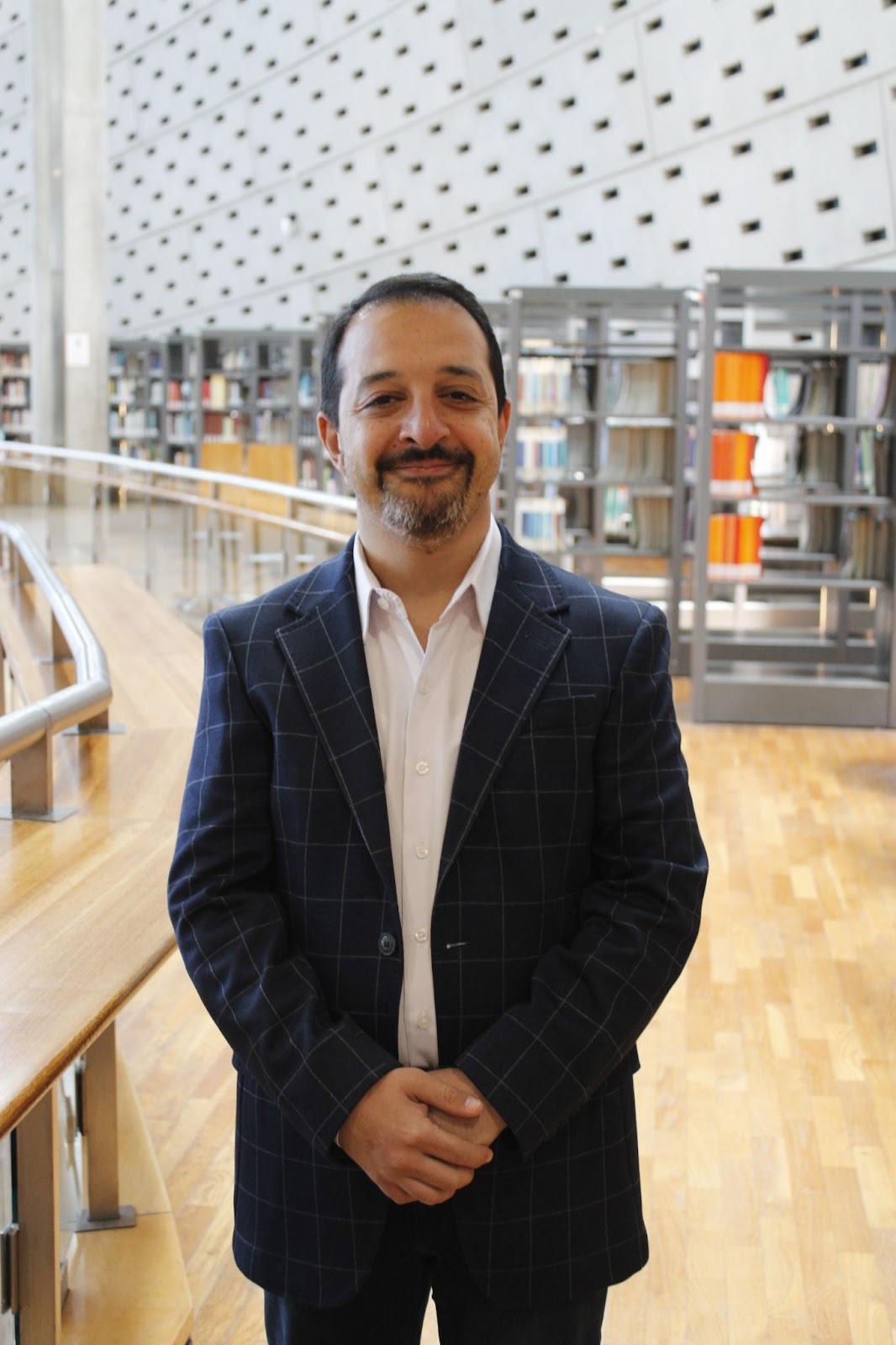 |
Ahmed Esmat works in the interface of media, Technology, and entrepreneurship domains. He pays great attention to digital literacy, data verification, responsible AI, and digital transformation in the media and entertainment industry. Professionally, he founded and ran several journalism/ media companies (Alex Agenda magazine, Amwague newspaper, Radio Mahatet El Raml, Alex Media Forum) and has extensive experience in teaching, training, consultancy, and media product management in reputed international and national institutes and educational organizations. He is a multi-award winner of the Media innovation prize from the Ban-Arab Thoughts Foundation (Fikr Al Arabi) 2016, Brunel London University Bronze Prize 2020, and holds an MSc from the same University in Business Intelligence and Digital Transformation as a Chevening scholar. Currently, Esmat is lecturing at the Adham Center for Television and Digital Journalism “KACAUC”, an assessor at the International Fact-checking Network “IFCN- Poynter Institute” and an AI Policy fellow at the Center for AI and Digital Policy “CAIDP", AI for Africa fellow, and recently was selected to join the FEF AI experts committee France/ Arab region.